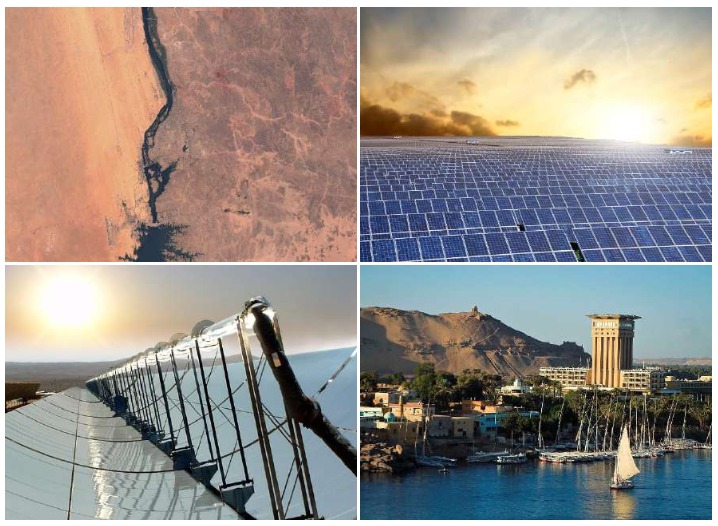
Planning and Management of Solar Power from Space presents, for the first time, a holistic solar energy management and planning solution using Earth observation data and methodologies, giving an alternative view for precise electricity production and handling. Including examples of exploiting this solution by transmission and distribution system operators and solar power plants of both Photovoltaic (PV) and Concentrated Solar Power(CSP) systems, this book showcases real implementations and benefits of Earth observation technology, thus providing solar sector professionals an approach for continuously monitoring solar energy production and atmospheric parameter forecasts in high spatial and temporal resolution.
By guiding readers in tracking solar energy availability in relation to time horizons and forecasting, this book addresses potential challenges in research and development since this technology and the extensive use of such data and services enable accurate solar energy estimations and forecasts useful mainly in energy production control and grid stability.
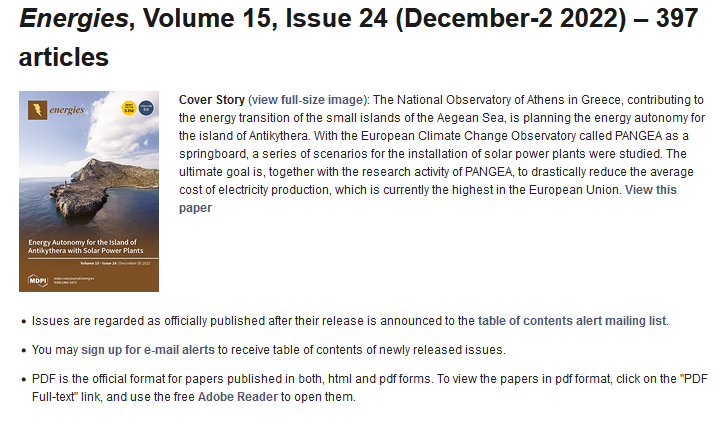
The National Observatory of Athens intends to operate a European Climate Change Observatory (ECCO) on the island of Antikythera, which meets the criteria to become a first-class research infrastructure. This project requires electricity that is unprofitable to get from the thermal units of this small island (20 km2). Solar energy is the subject that was examined in case it can give an environmentally and economically viable solution, both for the observatory and for the whole island. Specifically, observational and modeled data were utilized relevant to solar dynamic and atmospheric parameters in order to simulate the solar energy production by photovoltaics (PV) and Concentrated Solar Power (CSP) plant technologies. To this direction, a synergy of aerosol and cloud optical properties from the Copernicus Atmosphere Monitoring Service (CAMS) and the Eumetsat’s support to nowcasting and very short range forecasting (NWC SAF) with Radiative Transfer Model (RTM) techniques was used in order to quantify the solar radiation and energy production as well as the effect of the atmospheric parameters and to demonstrate energy adequacy scenarios and financial analysis. The ultimate goal is to highlight the opportunity for energy transition and autonomy for both the island itself and the rest of the community with the operation of ECCO, and hence to tackle climate change.